A few silver strands at the part can feel like a small detail until they start catching the light differently than the rest of your color. Then the question becomes less about whether to color your hair and more about how you want to see yourself in the mirror. Gray blending vs coverage is not a right-or-wrong decision. It is a design choice shaped by your natural pattern, desired contrast, lifestyle, and how often you want to visit the salon.
For some people, a soft mix of gray and dimensional color feels modern, intentional, and freeing. For others, rich, consistent coverage brings back the depth and polish they miss. The best result starts by looking at your hair as it actually grows, not by forcing it into a standard formula.
Gray Blending vs Coverage: The Real Difference
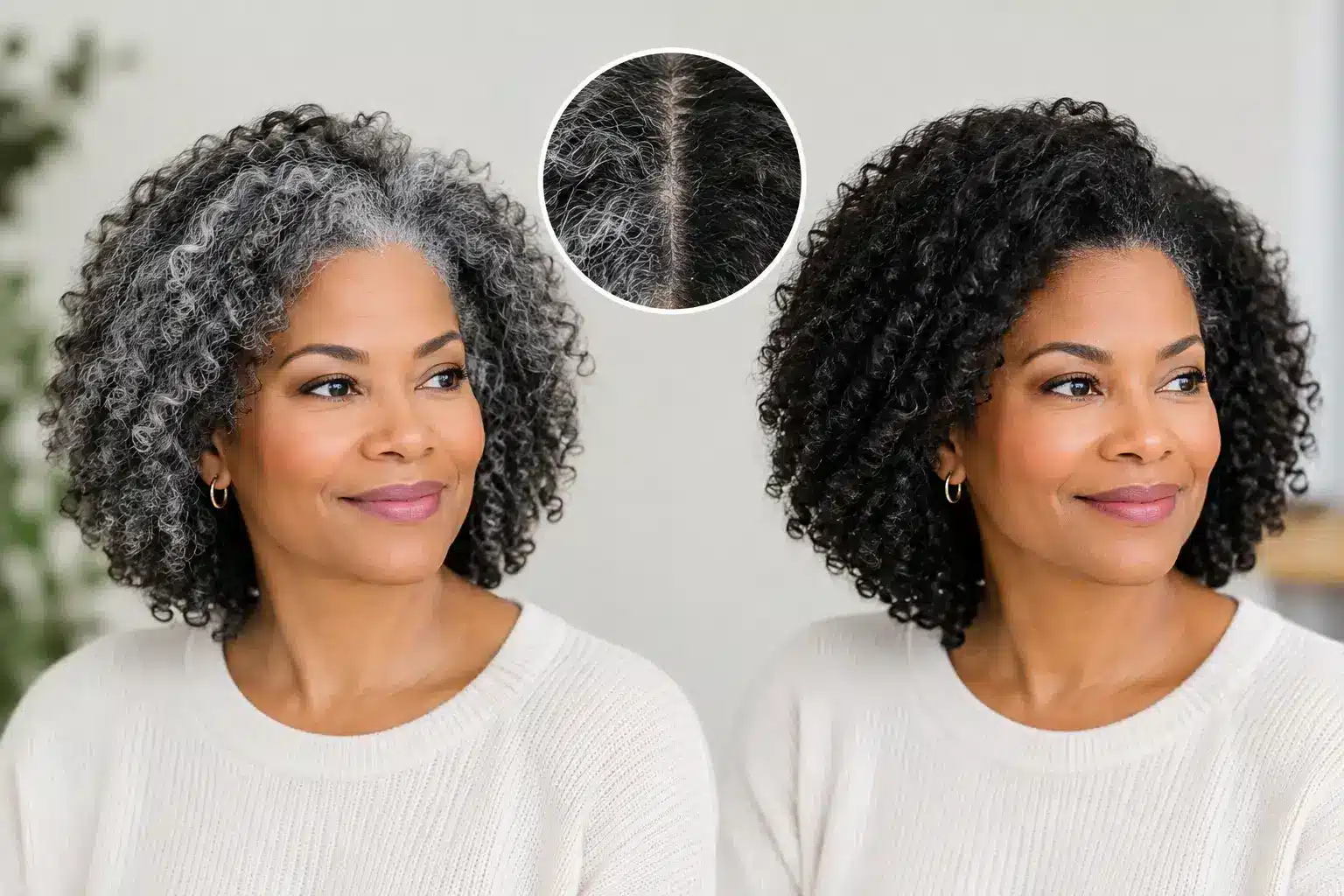
Gray coverage aims to make gray hair less visible by coloring it close to your natural or preferred base shade. Depending on the formula and your hair’s resistance, the result may be fully opaque or softly translucent. The goal is a more unified field of color from root to end.
Gray blending works with the gray rather than trying to erase every strand. Highlights, lowlights, glosses, root shadowing, and carefully selected base color can soften the line between gray and pigmented hair. Instead of one solid shade, the finished color has movement. Gray becomes part of the dimension.
The visual difference matters most at the root. With traditional coverage, new gray growth can create a noticeable line as your hair grows. With blending, the contrast at the root is usually gentler, especially when the placement and tones echo the way your gray naturally appears.
Neither approach is automatically more natural-looking. Excellent coverage can look beautifully natural when the shade has the right warmth, depth, and translucency. Poorly planned blending can look flat, brassy, or unfinished. Craft is what makes either choice believable.
When Full Gray Coverage Makes Sense
Coverage is often a strong choice when you prefer your pre-gray color, want a polished all-over effect, or have gray concentrated at the hairline and part where it feels visually distracting. It can be especially satisfying for darker brunettes, where bright white or silver hair creates a sharper contrast.
It also makes sense if you enjoy a dependable color rhythm. Many coverage clients return around every four to six weeks for root maintenance, though timing varies with growth rate, gray percentage, haircut, and how much root contrast you are comfortable seeing. A short precision cut can reveal regrowth sooner than longer, layered hair.
There is a practical benefit, too. A single-process root service can be a straightforward way to maintain color when your goal is consistency. If your ends have faded, a gloss or refresh can bring the whole shape back into balance without repeatedly pulling permanent color through already-colored lengths.
Still, full coverage requires thoughtful formulation. Gray hair can be resistant, particularly around the temples and hairline. It also has a different texture for many people, tending to feel coarser or drier. The answer is not simply using a darker formula or processing longer. It is selecting the appropriate color family, developer, timing, and placement while protecting the integrity of the hair.
Who Tends to Love Gray Blending?
Gray blending often appeals to people who are ready for a lower-contrast grow-out, but do not necessarily want to go completely gray. It is a middle path with plenty of room for personal expression.
If your gray is scattered through the top, concentrated at the temples, or forming bright ribbons around your face, it can be used as a guide. Fine highlights may connect those natural silver pieces through the rest of the hair. Lowlights can restore depth where the hair has become overly light. A gloss can refine unwanted yellow, dullness, or brassiness while keeping the result soft.
This approach can be beautiful on blondes, brunettes, redheads, and people who have worn fashion-forward color in the past. The formula changes, but the principle stays the same: create a believable relationship between the gray, the natural pigment, and the color you want to wear.
Blending is not always lower maintenance in the beginning. If your existing color is very dark and your roots are mostly white, transitioning to a softer look may take multiple appointments. Corrective work should move at a pace that respects your hair’s condition. Once the overall pattern is established, many clients find they can stretch appointments farther apart because regrowth does not announce itself as strongly.
Your Gray Pattern Matters More Than a Trend
Social media often makes gray blending look like one universal service, usually with bright ribbons and a dramatic before-and-after. Real hair is more specific. A person with 15 percent gray at the temples needs a different plan than someone with 70 percent gray across the crown.
The distribution matters. Gray that is evenly scattered can blend easily because it already creates natural sparkle. A bold white streak at the front may become a striking face-framing feature, or it may need surrounding color to feel integrated. Gray concentrated underneath can call for a different placement than gray that dominates the part and hairline.
Your starting color matters, too. Blending a medium brown with salt-and-pepper hair may call for lowlights and cool-to-neutral highlights. A warm brunette may need a little gold or copper to keep the finished color from looking muddy. For naturally curly hair, placement should also account for the way curls group, separate, and reflect light. Color that looks balanced on wet, straightened sections can read very differently once the curl pattern comes alive.
This is why a consultation should include more than choosing a photo. Looking at your hair in natural light, discussing your previous color history, and understanding how you style at home reveal what the color needs to do in everyday life.
Maintenance Is About More Than Appointment Timing
The maintenance conversation is usually framed as four weeks versus eight weeks. That is part of it, but not the entire picture. Consider how much you enjoy seeing dimension, how you feel about root contrast, whether you use heat styling, and whether your hair is exposed to sun, pool water, or Jacksonville’s humidity.
Full coverage generally asks for more frequent root work, but it can be simple and predictable. Gray blending may give you more grace between appointments, yet highlights and lowlights can take more time when they are refreshed. A blend also benefits from toning or glossing when you want to keep silver pieces bright and the rest of the color balanced.
At home, both approaches benefit from gentle cleansing, heat protection, and products selected for your particular color and texture. Purple shampoo can help some gray-blending clients control yellow tones, but it is not a universal fix. Used too often, it can leave porous hair looking dull or lavender. The right routine should support the color without turning hair care into another job.
Can You Combine Coverage and Blending?
Absolutely. Many of the most convincing results use both. You might choose soft root coverage at the hairline and part, where gray feels most prominent, while adding highlights or lowlights through the lengths to reduce the solid, helmet-like effect of one flat color. Or you may keep your natural gray at the temples and cover selected areas for a more balanced overall tone.
A hybrid plan is especially useful for clients growing out years of permanent color. Rather than making a sudden jump from deep brunette to fully silver, the hair can be gradually lightened, toned, and re-dimensioned over several appointments. The pace depends on prior color, hair strength, and your tolerance for an in-between phase.
At Richard McGraw Hair Design, that conversation begins with the person wearing the color. Your haircut, face shape, texture, work life, and maintenance boundaries all influence whether gray should disappear, soften into the background, or become one of the most interesting parts of your hair.
Choose the Result You Want to Live With
If seeing gray at all makes you feel unfinished, coverage may give you the confidence and consistency you want. If you are tired of chasing a sharp root line, blending may offer a softer, more flexible relationship with the color changes already happening in your hair.
Bring photos if they help, but also bring an honest answer to one question: when your hair grows in, what do you want to notice first? That answer is often more useful than choosing between gray blending and coverage before anyone has looked closely at your hair.