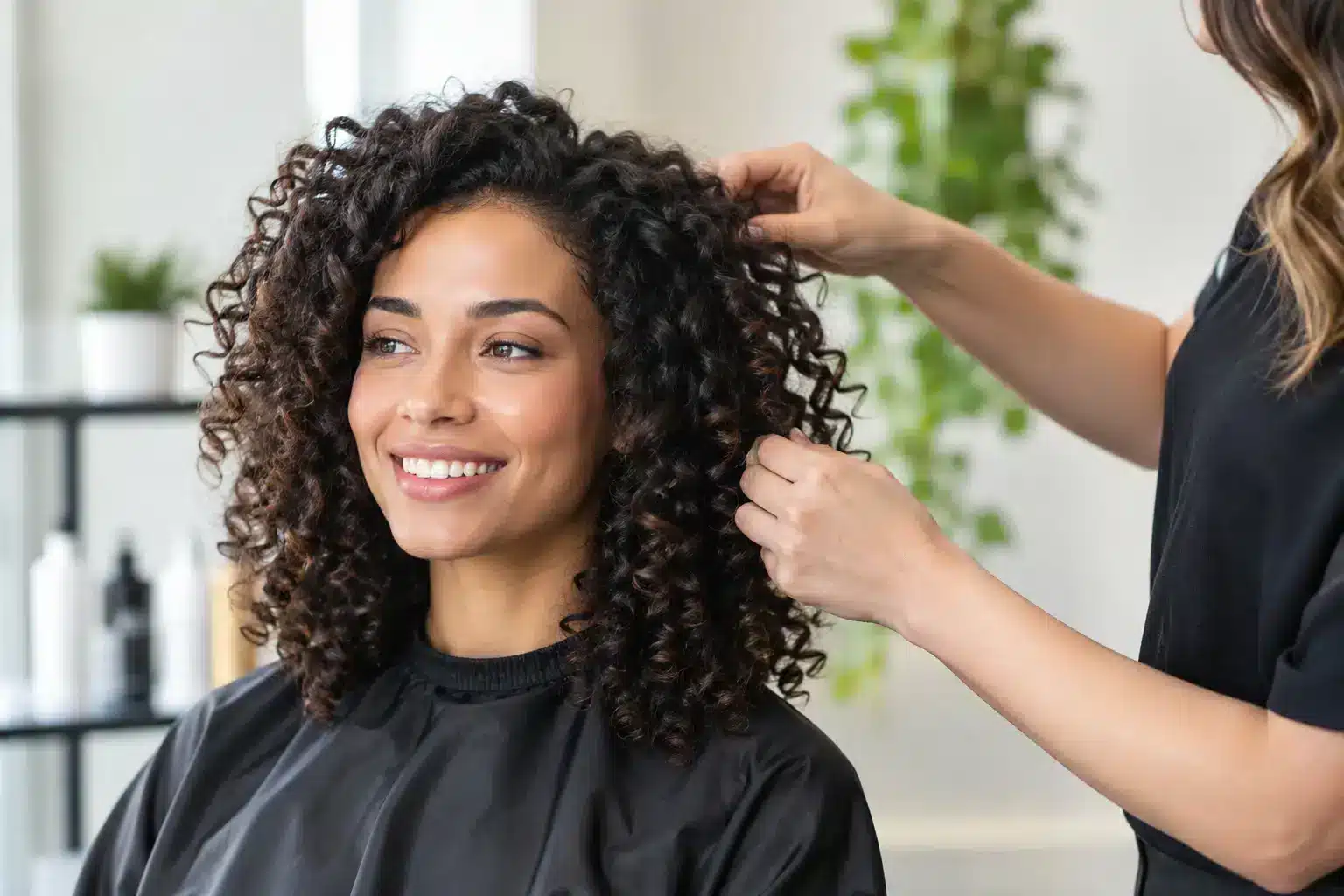
A curly styling service review is most useful when it tells you what happened after the client left the chair. A polished salon finish can look beautiful for an afternoon. The real measure is whether the shape still makes sense, the curls still have movement, and the client knows how to recreate the result on an ordinary Jacksonville morning.
For naturally curly and textured hair, styling is not an extra step added after a haircut. It is part of the design. The way hair is cleansed, cut, hydrated, layered with product, dried, and handled can change the final silhouette dramatically. That is why the best reviews describe the experience in specifics rather than simply saying, “My hair looks great.”
What a Curly Styling Service Review Should Include
A worthwhile review usually begins with the consultation. Curls are individual: two people can have similar-looking patterns but need entirely different shaping and styling plans. Density, strand width, porosity, past color services, shrinkage, face shape, and daily routine all influence the right approach.
Look for comments about being heard. Did the stylist ask how the client wears their hair most days? Did they discuss whether the client air-dries, diffuses, works out often, wears hats, or has ten minutes versus forty minutes for styling? Those details may sound small, but they are the difference between a look designed for a photo and one designed for a life.
A strong review may also mention a stylist explaining why a particular choice was made. Perhaps the hair needed more weight left around the perimeter to avoid a triangular shape. Maybe strategic layers were used to create lift without making the ends thin. Clear explanation is a sign that the service was intentional, not a familiar cut applied to an unfamiliar texture.
The Cut and Style Have to Work Together
Some curl clients have learned to separate a haircut from a styling appointment because they have had to. They receive a cut that appears acceptable when blown straight, then discover that it expands, collapses, or forms uneven shelves once their natural texture returns.
A curl-centered service approaches that problem differently. The shape is considered in the state the client actually wears it. Dry cutting can be especially valuable because it allows the stylist to see how individual curl groupings live, spring, and frame the face before water changes their length and behavior.
That does not mean every curly head requires the same dry-cutting method. Hair history matters. Very tangled hair, fragile lightened curls, or a client seeking a major transformation may need a different sequence. The point is not to follow a trendy formula. It is to choose a method that respects the hair in front of you.
Styling then confirms the design. Diffusing can reveal where the shape needs refinement, how the products are performing, and whether the curl pattern has enough support at the root. A review that mentions an awkward-looking haircut becoming beautifully defined only after careful styling is helpful, but an even better one explains that the client left knowing how to achieve that definition again.
Product application is technique, not product hype
Curly hair products do not work by name alone. Placement, quantity, water level, and the order of application matter just as much. A cream that gives one person soft definition may leave another person’s finer curls limp. A gel that creates an ideal cast on dense, thirsty hair may feel too heavy on a looser pattern.
An experienced stylist watches the response of the hair instead of assuming a product will solve every concern. They may use more water to encourage curl clumps, apply hold product in sections for consistency, or adjust the amount used around the crown and hairline. These are technical decisions, but they should be translated into practical language a client can use at home.
When reading a review, pay attention to whether the client felt educated rather than overwhelmed. You do not need a complicated shelf of products or a 12-step routine to care for curls well. You need a routine that fits your texture and that you can realistically repeat.
Signs the Result Will Last Beyond the Appointment
The most revealing feedback often arrives days or weeks later. A curly style has to survive humidity, sleep, work, exercise, and the occasional day when there is no time for a full refresh. In Northeast Florida, humidity is not a theoretical concern. It is part of the styling equation.
Helpful reviews mention durability in ordinary language: the shape still looked balanced after washing, the curls were easier to refresh, or the client stopped fighting the same frizzy areas every morning. These comments are more meaningful than a single statement about shine because they speak to function.
There are a few details that tend to signal lasting work:
- The client understands how to cleanse and condition without disrupting their curl pattern.
- They know which products to use and how much to apply to soaking-wet or damp hair.
- They were shown how to diffuse or air-dry without creating unnecessary frizz.
- The cut grows out in a way that keeps its general balance rather than losing its shape immediately.
No service can promise identical results every day. Weather, water quality, hormones, color processing, and a rushed routine all affect curly hair. But a thoughtful styling service gives clients a reliable starting point and the ability to make informed adjustments.
Why Hands-On Education Matters
Watching someone style your hair in a mirror is useful. Being invited to participate is better. Curl care is physical knowledge: how firmly to scrunch, where to direct the dryer, when to stop touching the hair, and how to lift the roots without pulling apart the curl clumps.
At Richard McGraw Hair Design, the Curl Revival service is built around that practical education. The consultation, dry cutting, detox treatment, diffused styling, and home-styling instruction are connected steps, not separate add-ons. The goal is to create a result that feels like your hair, only more intentional and easier to understand.
A review that praises patient instruction deserves attention, particularly if you have spent years receiving vague advice such as “use less heat” or “try curl cream.” Good guidance is more specific. It accounts for whether your hair gets oily at the scalp, whether your ends are dry from color, whether you prefer volume or definition, and whether you can commit to a full wash-day process every few days.
Not Every Great Curl Service Looks the Same
A successful result is personal. One client wants a rounded, expressive shape with plenty of volume. Another wants longer, more controlled curls that sit quietly around the face. Someone transitioning away from heat damage may be looking for patience and realistic expectations rather than an instant transformation.
This is where reviews need context. A client who wanted maximum volume may love a result that another person would find too expansive. Someone accustomed to a firm gel cast may view it as proof of long-lasting hold, while another may prefer a softer finish and less definition. Neither preference is wrong.
Read for similarities in priorities, not a perfect match in curl pattern. If a reviewer values careful consultation, healthy-looking texture, low-maintenance styling, and a stylist who explains the process, their experience may tell you more than a before-and-after photo ever could.
Questions Worth Asking Before You Book
Before choosing a curly styling service, ask how the appointment is structured and how much teaching is included. Ask whether the stylist works with your hair dry, wet, or both, and why that method suits your goals. It is also reasonable to ask how long the service takes, especially if you have dense hair or are planning color and curls in the same visit.
Be honest about your maintenance limits. If you will not diffuse, say so. If you love your wash-and-go routine, bring that up. If you are willing to learn a few new techniques but do not want a bathroom counter full of products, that is useful information. The right stylist will design within those boundaries rather than treating them as a failure of commitment.
The best curly styling service does not ask you to become someone else to maintain it. It helps you see what your natural texture can do when the shape, technique, and everyday routine are working together.