A color consultation often starts with a photo: soft brightness around the face, a sunlit blend through the ends, or a clean ribbon of blonde from root to tip. But the technique behind that image matters. Balayage versus traditional highlights is not simply a choice between trendy and classic color. It is a decision about how your hair grows out, how much contrast you want, what your natural texture does with light, and how often you realistically want to visit the salon.
The most beautiful result is rarely a copy of someone else’s hair. It is color placed with intention for your density, base color, haircut, curl pattern, skin tone, and everyday routine.
Balayage Versus Traditional Highlights: The Core Difference
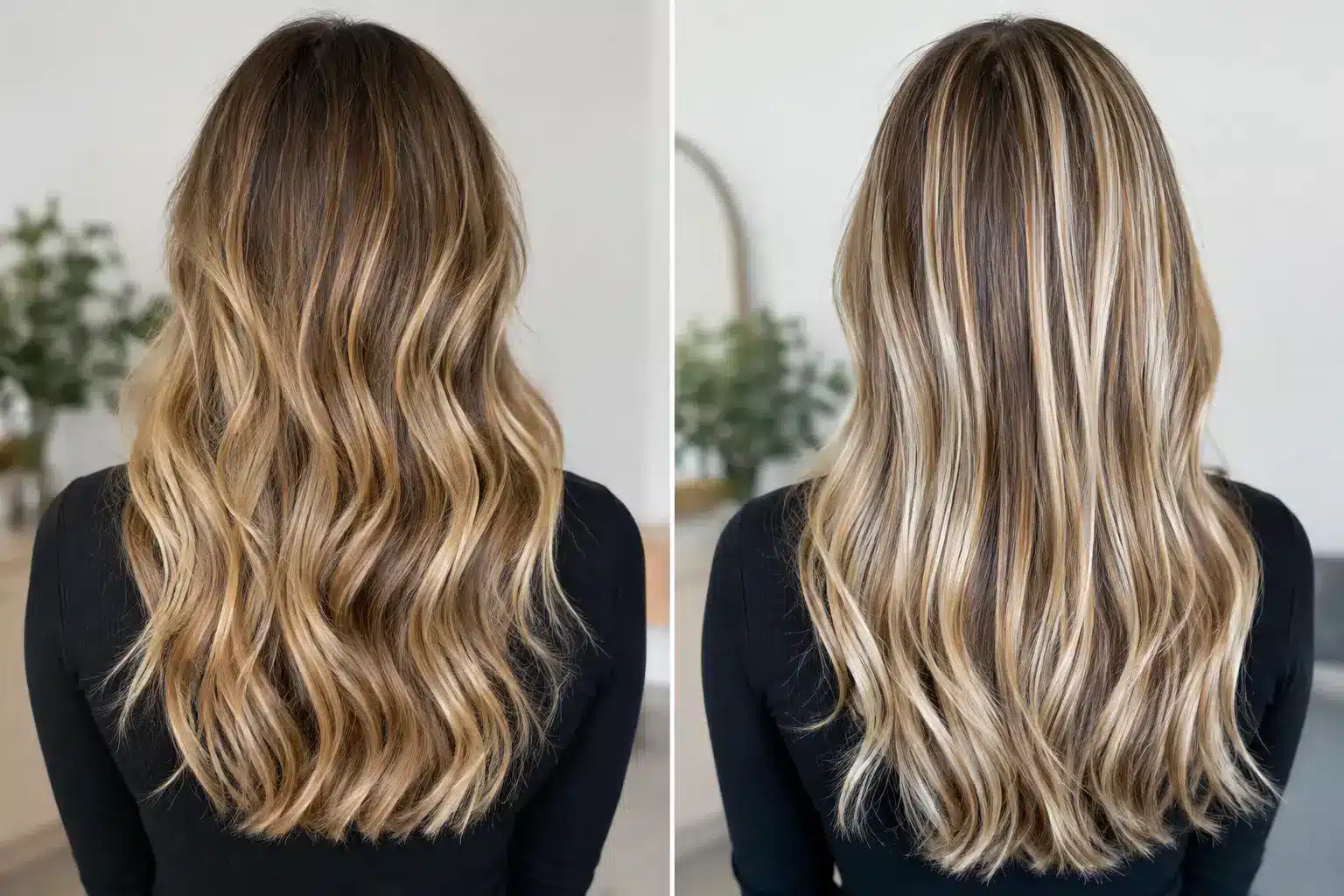
Balayage is a hand-painted lightening technique. Rather than enclosing every selected strand in foil, the stylist paints color where light would naturally catch the hair, often concentrating brightness around the face, through the mid-lengths, and at the ends. The application can be very soft and diffused, with darker depth left between painted pieces.
Traditional highlights usually involve sectioning the hair into fine, medium, or bold weaves and placing those sections in foils. Foils hold the lightener close to the hair and generate warmth, which can create more lift than open-air painting in many situations. They also allow a stylist to bring brightness closer to the scalp with crisp, controlled placement.
Neither technique is automatically more natural, healthier, or lower maintenance. A subtle foil highlight can look beautifully lived-in. A high-contrast balayage can require considerable maintenance and careful toning. The better question is: where do you want to see light, and how do you want that light to evolve between appointments?
What Balayage Looks Like as It Grows
Balayage is often a strong choice for someone who wants dimension without a pronounced line at the root. Because the placement is typically softer and more concentrated away from the scalp, new growth can blend into the design rather than announcing itself immediately. This is why balayage appeals to clients who prefer longer intervals between lightening services.
That does not mean balayage is a “set it and forget it” service. Warmth can appear as previously lightened hair fades, especially in Florida sun, humidity, pool water, and frequent washing. A gloss or toner appointment may keep the color refined between larger lightening sessions. Hair that has been painted very light may also need consistent moisture, bond-supporting care, and heat protection to stay polished.
Balayage has a particularly graceful relationship with movement. Waves, curls, layers, and textured cuts reveal the shifting brightness of hand-painted color. On naturally curly hair, placement should follow the curl’s visual shape, not a formula copied from straight hair. A curl may look bright in one spot when dry and disappear when it springs up, so thoughtful consultation and dry-hair observation can make a major difference.
When Balayage May Be the Right Direction
Balayage can suit you if you like softness at the root, depth between lighter pieces, and a less scheduled-looking grow-out. It can also be ideal when you want a warm, dimensional brunette, honey blonde, caramel blend, or a brighter face frame without committing to an all-over blonde effect.
It may be less ideal when your goal is very pale, highly even blonde starting close to the scalp. That look can certainly include hand-painted details, but foils are often the more efficient and predictable foundation for substantial lift.
What Traditional Highlights Do Best
Traditional highlights provide precision. The stylist can choose exactly how fine, dense, bold, or close-to-the-root each section should be. Fine highlights, sometimes called babylights, can create an airy veil of brightness. More densely packed foils can transform a deeper base into a much lighter overall result. Strategic lowlights can add back dimension when hair has become too solid or overly blonde.
Foils are also useful for clients working toward a significant color change over time. If the hair needs to lift through stubborn warm underlying pigment, foils can provide the controlled environment needed to reach a cleaner level safely. This matters when a client wants cool blonde tones, beige blonde, or a high-impact contrast against a naturally dark base.
The trade-off is visibility at the root. Even when highlights are fine and blended, the pattern can become more noticeable as the hair grows. Many foil-highlight clients prefer a more regular maintenance schedule, especially if they wear a part that exposes the hairline and crown.
Highlights Can Still Look Soft
Traditional does not mean striped. Outdated highlight work often comes to mind when people picture obvious lines or chunky bands, but modern foil placement can be delicate, blended, and tailored. A skilled application considers the part, face shape, density, previous color, and how the hair is worn most days.
For example, a client who wears her hair in a sleek bob may benefit from fine, carefully placed foils that keep the color bright and intentional around the perimeter. Someone with thick, dark hair who wants noticeable blonde may need a denser foil pattern than a client who only wants a subtle lift near the face. Technique follows the goal, not the other way around.
Maintenance Is More Than Appointment Timing
It is tempting to label balayage low maintenance and highlights high maintenance, but real maintenance includes more than root growth. Consider how you feel about warmth, how often you heat-style, whether you swim, and how much at-home care you enjoy doing.
A balayage client may go longer between full lightening appointments yet benefit from a gloss every six to ten weeks to refresh tone and shine. A traditional highlight client may return for partial foils more often, but may not need a complete transformation each time. Both can be adjusted with root shadows, face-framing brightness, lowlights, and toning to make the schedule feel manageable.
Your haircut matters, too. A sharp, blunt cut shows color placement differently than long layers. Curls can hide or reveal dimension depending on how they are styled. If you regularly wear your hair up, brightness around the hairline and nape may matter more than it does for someone who wears a center part and loose waves every day.
Your Starting Point Shapes the Best Technique
Virgin hair, previous highlights, permanent color, gray coverage, box color, and color correction all change the plan. Lightener does not erase history. A stylist needs to understand what has been on the hair before promising a particular level of brightness or a specific timeline.
If you cover gray at the root and want lived-in blonde through the lengths, a combined approach may be best: root color for coverage, then balayage or foils for dimension. If your ends are already very light but your roots have grown in, a partial highlight with a soft root melt may create a more balanced result than starting over with broad hand-painted sections.
Many of the most natural-looking colors use both techniques. Foils can create controlled lift where it is needed most, while balayage can soften the ends or add a painted finish. A face frame may be foiled for brightness and then melted into hand-painted pieces behind it. Hair color is art, but it is also chemistry and careful placement.
Choosing Color That Works in Everyday Life
Bring inspiration photos, but also bring honest information. How often do you wash? Do you diffuse curls, blow-dry smooth, or air-dry? Are you willing to use purple shampoo occasionally, or would you rather keep the tone warm and easy? Do you want people to notice your color immediately, or simply think your hair looks unusually healthy and dimensional?
At Richard McGraw Hair Design, that conversation is part of the craft. The goal is not to steer every client toward balayage or every client toward foils. It is to create color that works with the way you actually live, including Jacksonville’s bright sun and the styling realities of your natural texture.
Choose the technique that supports your next several months, not just the photo you love today. When the placement, maintenance plan, and haircut all agree, your color keeps looking like you long after you leave the chair.