A color inspiration photo can make the choice look simple: soft, sunlit balayage or bright, dimensional foils. In real hair, the balayage foil comparison is less about choosing a trend and more about choosing a technique that works with your natural level, previous color, texture, and the amount of maintenance you actually enjoy. Two people can ask for the same picture and need completely different color plans.
Balayage and foils are both tools for creating lightness and dimension. Neither is automatically more modern, more flattering, or better for your hair. The artistry comes from knowing where brightness belongs, how much contrast your haircut can support, and how the color will grow out in your everyday life.
Balayage Foil Comparison: The Core Difference
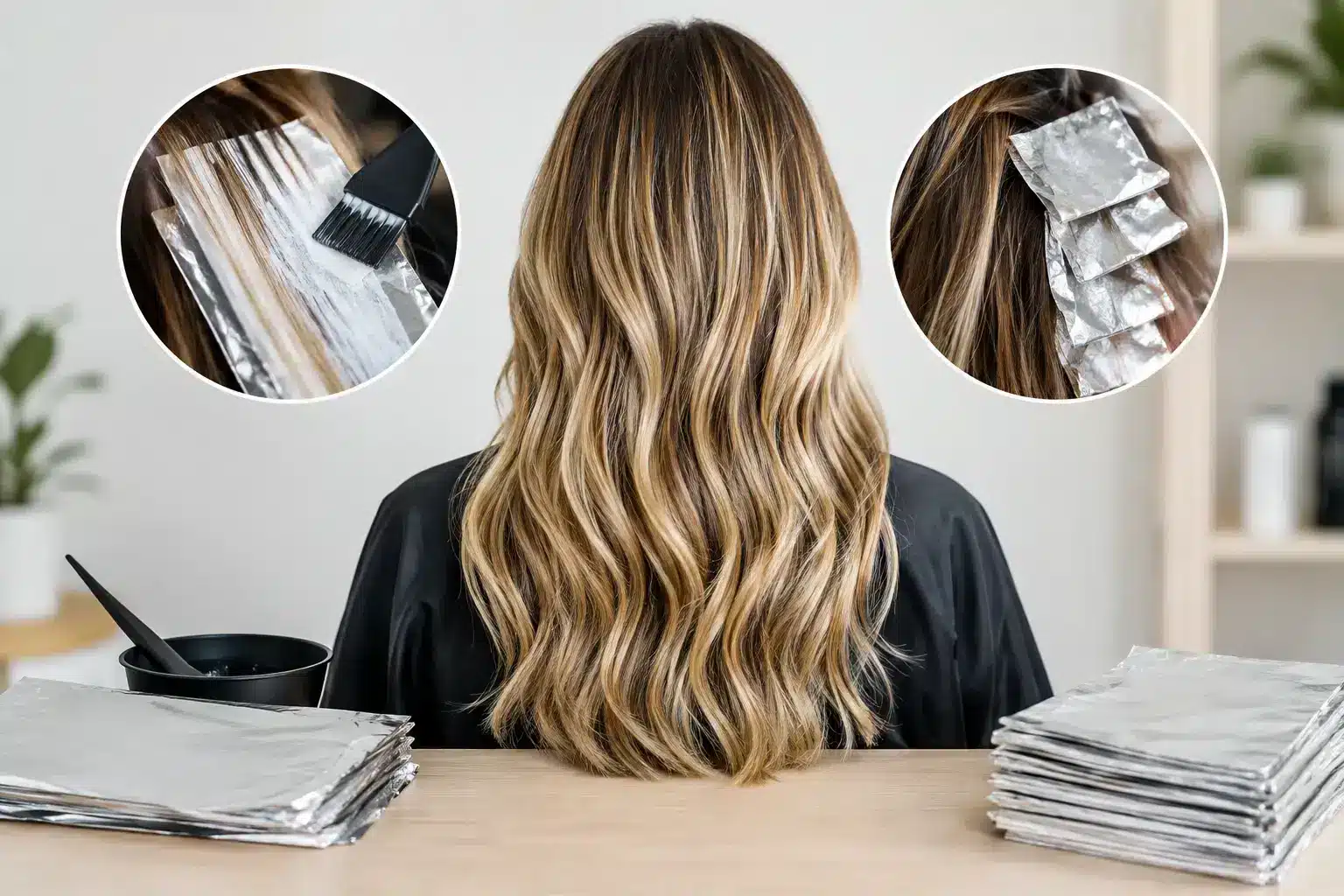
Balayage is a hand-painted lightening technique. Color is brushed onto selected sections of hair, usually with a soft transition from deeper roots to lighter ends. The placement can follow the movement of a long layer, frame the face, or create a gentle shift through curls. Because the color is painted rather than wrapped tightly from root to end, balayage often creates a diffused, lived-in result.
Foils use thin sheets to isolate sections of hair while they process. That isolation holds warmth and moisture close to the lightener, helping it lift more efficiently and predictably. Foils allow a stylist to work closer to the root, create a more even level of brightness, and place fine ribbons of light exactly where they will make an impact.
Think of balayage as painting light across a canvas and foils as building precise points of illumination. Both can be subtle. Both can be bold. The difference is in the control, saturation, and pattern each method makes possible.
When Balayage Is the Better Choice
Balayage is especially appealing when you want color that looks naturally softened rather than visibly striped from the root. It works beautifully for clients who like warmth, movement, and a little shadow at the scalp. A thoughtful balayage can make hair look as though it has spent a summer outdoors, but it is not limited to beachy blondes. Brunettes can use it for caramel movement, redheads can use it for copper glow, and darker hair can carry subtle espresso-to-mocha dimension.
The grow-out is a major reason clients choose it. With a blended root area, there is usually no sharp line when the hair grows. That can make balayage a good fit for someone who prefers longer intervals between color appointments. It does not mean zero maintenance, though. Blonde or copper tones may still need glossing to stay polished, and lightened ends still benefit from mindful conditioning and heat protection.
Balayage can also be an excellent choice for curly and textured hair when placement is designed around the curl pattern. Light placed randomly without regard for the way curls spring up can disappear in some areas and look too heavy in others. A customized approach considers where each curl catches light, how much the hair shrinks when dry, and whether the client wears it naturally textured, blown out, or both.
There are limits. If your hair is very dark and you want a very pale, cool blonde result, open-air balayage may not provide enough lift in one session. It can create a beautiful soft effect, but it may take multiple visits to reach a lighter goal while protecting the integrity of the hair.
When Foil Highlights Make More Sense
Foils are often the stronger choice when brightness is the priority. They can lift dark hair more effectively than traditional open-air painting, which matters for clients moving toward a brighter blonde or trying to break through old color. They are also useful when gray coverage needs to blend into highlights, since fine foils can soften the contrast between natural silver and the rest of the hair.
Precision is another advantage. If you want brightness right near the root, a consistent blonde through the interior, or delicate highlights that create the appearance of more density, foils give the stylist a high degree of control. Fine, carefully woven foils can look exceptionally natural. The old idea that foils always mean bold stripes is simply a placement issue, not an inherent flaw in the technique.
For shorter cuts, bobs, and hair with strong geometric lines, foils can be particularly effective. A precise haircut reveals color placement more clearly, so strategically placed highlights can support the shape rather than compete with it. A face-framing foil pattern, for example, can brighten the features while keeping the rest of the color refined.
The trade-off is maintenance. Highlights placed close to the scalp generally show new growth sooner than a root-melted balayage. Many clients still find the upkeep manageable, especially with a softer partial highlight plan, but the best schedule depends on the contrast between your natural color and your desired brightness.
Brightness, Blending, and the Middle Ground
The choice does not always have to be balayage versus foils. Some of the most natural-looking color uses both. Foils can create the level of lift needed for a bright blonde, while hand-painted pieces soften the ends and keep the result from looking overly uniform. A root shadow, glaze, or carefully blended lowlight can bring the entire design together.
You may also hear the term foilayage. This describes hand-painted sections that are then enclosed in foil. It gives the stylist some of the freehand artistry of balayage with the additional lifting power of foils. It is often useful for clients with darker bases, resistant hair, or previous color that needs more help releasing warmth.
What matters is not the name of the service on a menu. What matters is the result you want to see in natural daylight. Do you want a whisper of dimension or a noticeable blonde presence? Do you like a deep root, or do you want lightness close to the scalp? Those answers guide the technique.
Hair History Changes the Plan
Color history has a larger role in this decision than most inspiration photos reveal. Virgin hair, previously highlighted hair, permanent dark color, at-home box color, and old fashion shades all react differently to lightener. A foil service may be needed to work through a stubborn band of color. In another situation, gentle balayage placement may be wiser because the ends are already fragile.
Hair health is not protected by avoiding one technique and choosing another. It is protected by appropriate timing, sectioning, product selection, processing supervision, and realistic goals. Going from dark brown to icy blonde can be a significant chemical journey whether it happens in foils or through hand painting. Sometimes the most beautiful plan is a gradual one, with enough depth left in the hair to keep it glossy and strong.
This is also where an honest consultation matters. Bring reference photos, but be ready to discuss what you like about them: the brightness around the face, the warm beige tone, the shadow at the root, or the overall contrast. Those details are more useful than asking for a technique by name.
Maintenance Should Match Your Real Routine
A color service should suit more than your Pinterest board. Consider how often you wear your hair curly, how frequently you use hot tools, whether you swim, and how much time you want to spend in the salon. Jacksonville sun, humidity, and pool exposure can make a toner fade faster or leave blondes feeling dry, so at-home care is part of preserving the color you paid for.
Balayage often works well for lower-maintenance clients because the root can grow in softly. Foils may suit someone who loves a brighter, cleaner blonde and is happy to return more regularly for refinement. Either option benefits from professional-grade cleansing, a weekly conditioning treatment suited to your hair, and heat protection before styling. Purple shampoo can help some blondes, but overusing it may leave porous hair dull or overly cool, so it should be chosen with your specific tone in mind.
At Richard McGraw Hair Design, the conversation begins with the person wearing the color, not a preset formula. Your face shape, haircut, curl pattern, existing color, and maintenance limits all belong in the plan.
The right choice is the one that still feels like you six weeks later, in your own mirror, with your own styling routine. Bring the photo that caught your eye, then let the technique serve the vision rather than dictate it.