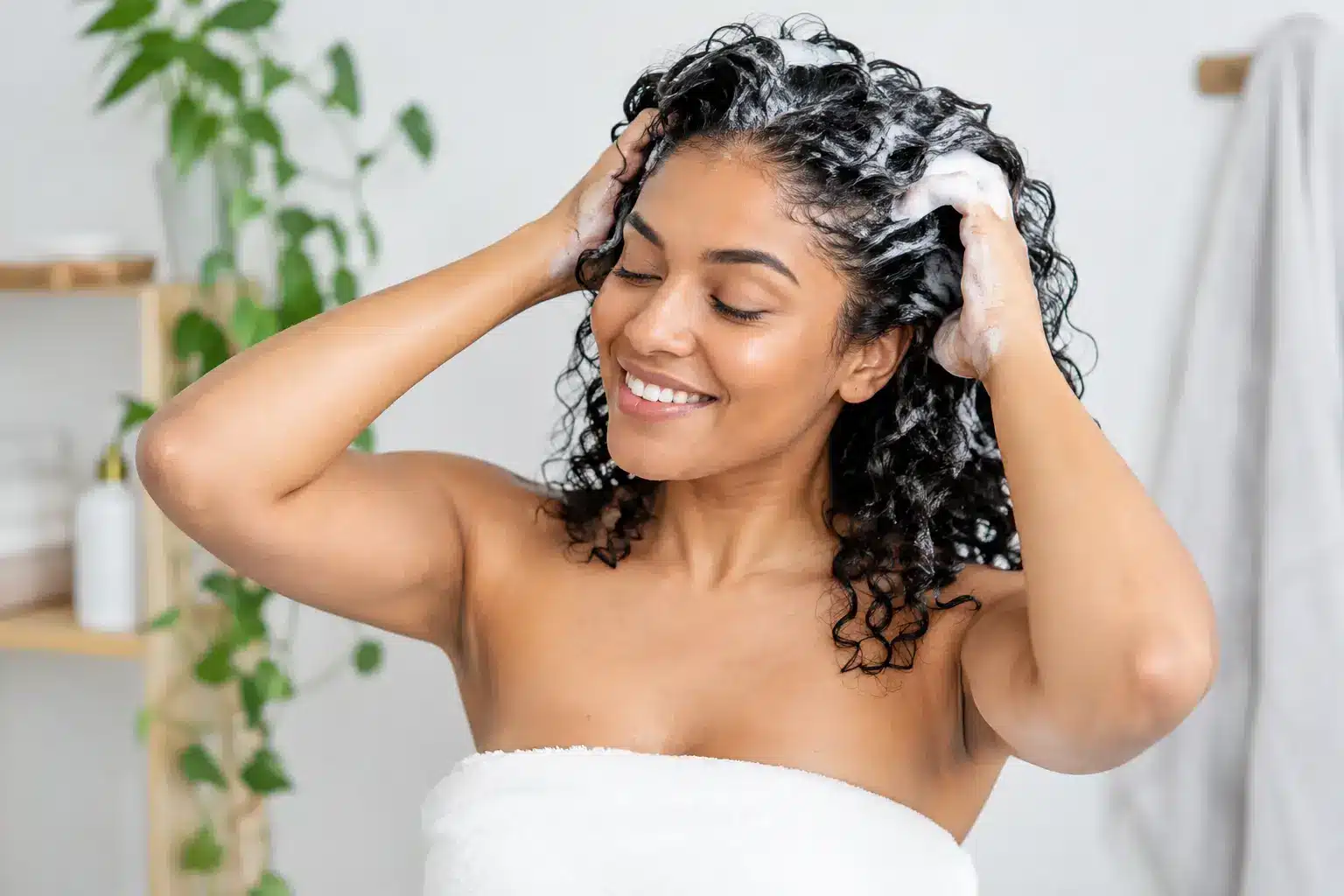
The difference between a wash day you enjoy and one you spend fighting usually starts before the water turns on. A good guide to wash day is not a rigid ten-step routine or a shelf full of products. It is a repeatable process that respects your curl pattern, scalp, color, schedule, and the amount of styling you realistically want to do on a Tuesday morning.
For curly and textured hair, wash day is where the shape of a haircut either comes to life or gets lost. The goal is not to force every curl into matching ringlets. It is to cleanse the scalp, add the right amount of moisture, encourage natural clumps, and set the hair in a way that makes sense for your life.
Start With Your Hair, Not Someone Else’s Routine
Wash-day advice can become strangely absolute. One person says never use shampoo. Another washes daily. A third swears that brushing curls is always wrong. The better answer is usually: it depends.
If your scalp gets oily, itchy, flaky, or coated with dry shampoo and styling products, you may need to cleanse more often. If your hair is very dry, highly porous, tightly textured, or color-treated, stretching time between washes may help preserve softness and reduce unnecessary fading. Sweat after a workout does not automatically require a full wash, though some scalps feel better with one.
Pay attention to what happens on day three, four, or five. Is your scalp uncomfortable? Are your curls limp because of buildup? Is your hair dry only at the ends? Those details tell you more than a schedule copied from social media.
Your cut matters here, too. Curls are shaped by spring factor, density, and the way sections live around the face. A routine should support that design rather than flattening it under a heavy product routine that was meant for a completely different texture.
A Guide to Wash Day, Step by Step
Begin with a real scalp cleanse
Wet your hair thoroughly with comfortably warm water. Curly hair can feel saturated on the surface while the roots and inner layers are still dry, especially when it is dense. Give the water time to travel through the hair before applying cleanser.
Place shampoo or cleansing conditioner primarily on the scalp, then massage with the pads of your fingers. Avoid scraping with nails. You are lifting oil, sweat, and product residue from the skin, not roughing up the hair shaft. Let the suds that rinse through the lengths do some of the cleaning there.
The right cleanser depends on your scalp and hair history. A gentle shampoo can work beautifully for many curl types. A co-wash may suit hair that stays dry and has little buildup, but it can leave some scalps feeling coated over time. If you use hard-hold gels, silicones, oils, dry shampoo, or live in a humid place like Jacksonville, a periodic clarifying wash can reset the hair.
Clarifying is useful, not a punishment. Follow it with a moisturizing conditioner or mask, and do not use a strong clarifier so often that your hair begins to feel rough or brittle. Color-treated hair may need an especially thoughtful balance between removing buildup and preserving color vibrancy.
Condition with patience, then detangle gently
Apply conditioner through soaking-wet lengths and ends. Water is part of the styling equation: it helps conditioner spread, encourages curl clumps, and prevents you from using too much product in an attempt to fix hair that is simply under-hydrated.
Use your fingers first to separate knots, then reach for a wide-tooth comb or detangling brush only if it helps. Start at the ends and work upward. If you hit a stubborn knot, add more water and conditioner instead of pulling harder. A little patience here protects the curl pattern and prevents breakage.
This is also the moment to notice changes. Excessive tangling, sudden shedding, rough ends, or a curl pattern that no longer behaves as expected can signal that it is time for a trim, a product adjustment, or a conversation with your stylist. Hair does not need to look perfect in the shower, but it should not feel like a daily argument.
Rinse according to the result you want
There is no universal rule that conditioner must be rinsed out completely. Fine or easily weighed-down hair often benefits from a thorough rinse, while drier curls may like a light conditioning slip left behind. Try changing only one variable at a time so you can tell what actually helped.
If you are using a rinse-out mask, follow its directions. Leaving a mask on longer does not always make it more effective. Some formulas can leave hair limp, coated, or overly soft when used too heavily.
Style While the Hair Is Still Very Wet
The few minutes after rinsing are where many curl routines go sideways. Towel-dried hair can lose the defined clumps you created during conditioning. For most curl patterns, styling on wet or very damp hair gives better distribution and more consistent definition.
Choose products based on the finish you want. A lightweight leave-in can improve softness and manageability. Creams can add moisture and shape, particularly for thicker or drier hair. Mousse often gives airy volume. Gel provides structure, humidity resistance, and hold. You may use one product or layer several, but more is not automatically better.
Apply products in sections if your hair is dense or if the underneath layers tend to frizz. Smooth product over the hair, then scrunch upward to encourage clumps. If your curls become stringy, add water before adding more product. If they feel greasy or fall flat, use less leave-in or cream next time and let a gel or mousse do more of the holding.
A gel cast is not a styling failure. That firm, slightly crunchy feeling often means the product has formed a protective hold around the curl as it dries. Once the hair is completely dry, gently scrunch the cast with dry hands or a tiny amount of lightweight oil if needed. The result should feel softer while retaining the shape.
Dry Without Disturbing the Pattern
How you dry your hair is a creative choice as much as a practical one. Air-drying is simple and can give a relaxed finish, but it may take a long time in humid weather and can leave the roots flatter. Diffusing speeds up drying, adds root lift, and often creates more durable definition.
If you diffuse, begin by hovering around the roots to set the product without moving the curls too much. Then cup sections in the diffuser bowl and bring it toward the scalp. Use low to medium heat and airflow when possible. High heat is tempting when you are late, but repeated heat stress can leave curls dull, dry, and less elastic.
Try not to touch the hair repeatedly while it dries. Frizz is not a moral failure, and some texture is part of natural-looking curls. Still, constant handling breaks apart curl clumps before they have a chance to set.
A microfiber towel or soft cotton T-shirt can remove excess water with less friction than a traditional bath towel. Gently scrunch or wrap the hair briefly. Do not rub it back and forth as if you are polishing furniture.
Make Day Two Easier on Day One
A successful wash day should not require you to start from zero every morning. At night, protect curls from friction with a satin or silk pillowcase, bonnet, or scarf. The best option is the one you will actually use consistently.
For a refresh, begin modestly. Mist areas that lost shape with water, then add a small amount of product only where it is needed. A little mousse or diluted leave-in can revive flattened pieces; a touch of gel can help a frizzy crown. Saturating your entire head with product every day can lead to buildup and make the next wash harder.
If your curls are crushed at the roots, clip them up while diffusing during the original wash day, or use a pick gently at the scalp once the hair is dry. Avoid raking through the ends if definition is your priority.
When Wash Day Needs a Professional Reset
Sometimes the issue is not your technique. A haircut that has grown out, uneven color processing, hard-water mineral buildup, or a product routine that no longer suits your hair can change everything. Curly hair especially benefits from a shape designed around how it expands, shrinks, and falls when dry.
At Richard McGraw Hair Design, curl appointments are built around that individual reality, including dry cutting, detox treatment, diffused styling, and hands-on instruction. The point is not to send you home with a complicated ritual. It is to help you understand what your own hair is asking for.
Let your wash day evolve. Seasonal humidity, a new color service, a change in water quality, or simply a shorter haircut can all call for small adjustments. The most useful routine is the one that leaves your scalp comfortable, your curls recognizable, and your morning a little less crowded with guesswork.