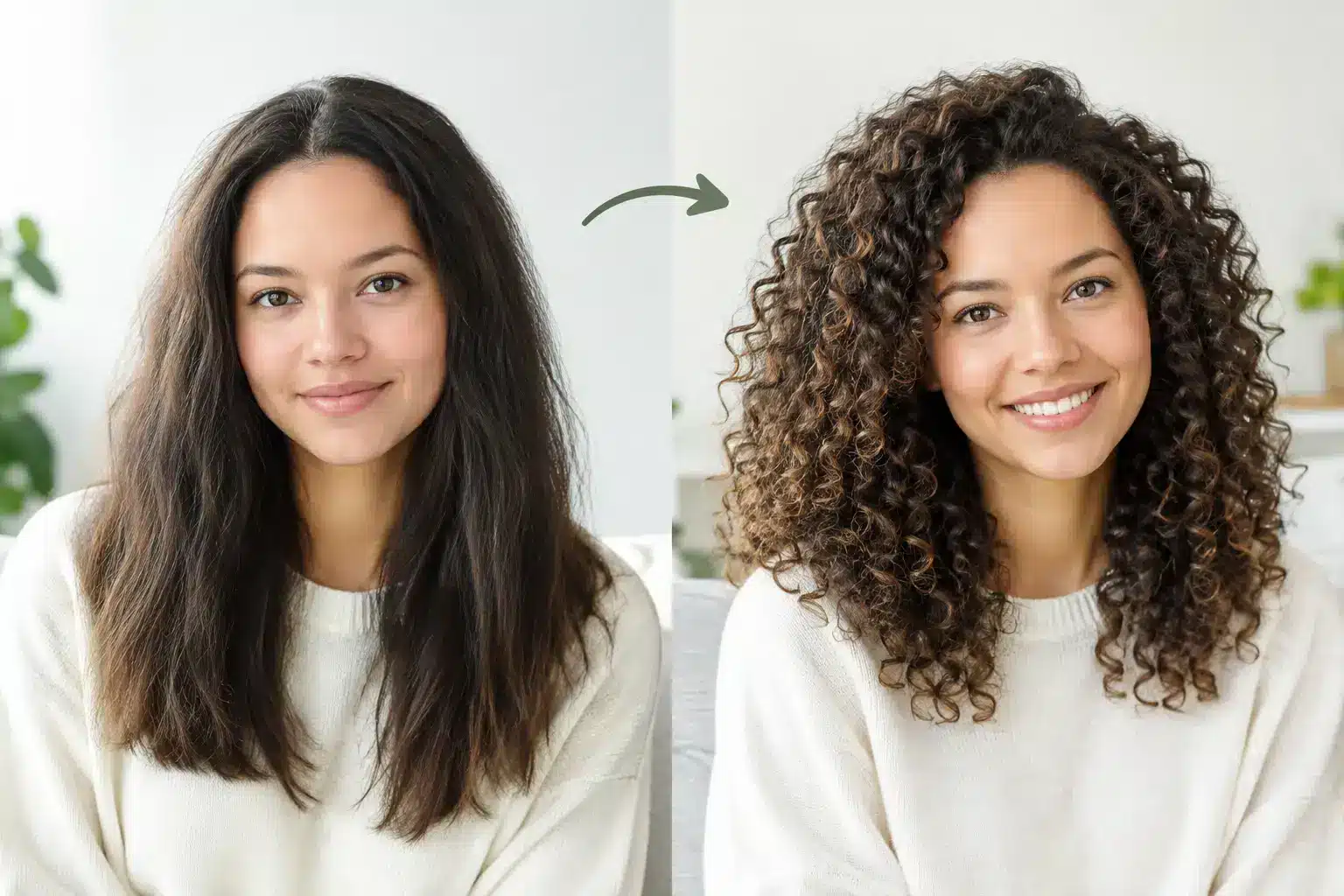
A meaningful curly transformation example is rarely just a dramatic before-and-after photo. It is the moment someone realizes their hair is not difficult, broken, or destined to live in a bun. More often, it is a carefully built result: a shape that works with the natural pattern, a healthier foundation, and a styling routine realistic enough to repeat on an ordinary Tuesday morning.
For people with curls in Jacksonville, that distinction matters. Many have spent years receiving haircuts designed for straight hair, then leaving with curls blown smooth or styled in a way they cannot recreate. A real transformation should look beautiful in the salon, but it should also make sense once the client is home, dealing with humidity, work, family, and limited time.
What a curly transformation example really shows
The most compelling curl transformations are not about making every curl look identical. Natural texture has variation. A person may have looser waves at the crown, tighter spirals near the face, and dense, coily sections underneath. That variation is part of the design challenge and part of what makes curly hair visually interesting.
A strong transformation begins by seeing the whole person, not simply identifying a curl type. Face shape, density, shrinkage, previous color, curl behavior, lifestyle, and maintenance preferences all affect the right plan. Someone who wants wash-and-go hair needs a different shape than someone happy to diffuse and refine individual curl sections. Neither preference is better. The haircut should respect it.
The visual change may include more definition, less bulk in the wrong places, a stronger silhouette, or curls that finally frame the face rather than hiding it. Sometimes the biggest difference is subtle: the hair still looks like the client’s hair, only more intentional, balanced, and alive.
The “before” is not a failure
Before photos often show uneven volume, triangular shape, frizz, or curls that appear to compete with one another. Those conditions do not mean the person has bad hair. They usually indicate that the previous cut, product choices, or styling method did not support the way their texture actually behaves.
For example, too many short layers can create a shelf of volume around the crown. A blunt perimeter may make dense curls expand outward instead of falling into a flattering shape. Heavy buildup can leave curls dull and reluctant to form clumps, while harsh cleansing can create dryness that reads as frizz. The correct response depends on the cause. Taking out more length is not automatically the answer.
The consultation is where the transformation begins
Before scissors or color enter the conversation, there should be room to talk. A detailed curl consultation asks questions that photos alone cannot answer. How often do you wash? Do you air-dry or diffuse? Which sections give you trouble? What has been cut or colored previously? How much styling time feels reasonable? What do you like about your hair when it behaves well?
This is also the time to be honest about trade-offs. A highly sculpted curly shape may need more frequent maintenance to preserve its balance. Significant lightening can create beautiful dimension, but curly hair may require added moisture and more thoughtful care afterward. A client who wants maximum fullness may need to accept more volume in humid weather. Great hair design does not promise every outcome at once. It helps you choose the priorities that matter most.
At Richard McGraw Hair Design, curl work is approached as a collaboration rather than a preset service. The goal is not to impose a trendy shape. It is to create hair that reflects the client and supports daily life.
Why dry cutting can change the result
Curly hair changes length as it dries, and it does not always shrink evenly. Cutting curls dry allows the stylist to see where each curl naturally lives, how it springs up, and how the overall shape relates to the face. It can prevent the familiar surprise of a wet haircut becoming far shorter or wider than expected once the hair dries.
Dry cutting is not a magic technique that suits every head of hair in exactly the same way. Some curl patterns benefit from a combination of dry shaping and wet refinement. The important point is intentionality. Each section should be evaluated according to its density, direction, and role in the final silhouette.
A well-designed curl cut often creates movement without thinning the hair indiscriminately. Excessive thinning can separate curl clumps, create flyaways, and leave the ends looking sparse. Instead, thoughtful internal shaping and perimeter design can remove weight where it overwhelms the shape while preserving the density that gives curls their presence.
Detox and moisture are not interchangeable
A transformation may also begin with a reset. Product buildup, hard-water minerals, oils, and residue can coat the hair, making it feel heavy or preventing curl formation. A detox treatment can clarify that buildup so the stylist can assess the natural texture more accurately.
That does not mean every curly client needs clarifying at every visit. Over-cleansing can leave some hair dry and less elastic. The right approach depends on the hair’s feel, its recent product history, and whether the issue is buildup, dehydration, damage, or a combination. Once the hair is properly reset, conditioning and styling products can be chosen with more precision.
Styling is the part that makes the result last
A salon transformation loses value if the client leaves with no idea how to repeat it. Curls need technique as much as they need products. Product order, how wet the hair is during application, how sections are formed, and whether the hair is touched while drying can change the result completely.
For some people, the most useful lesson is learning to apply stylers to soaking-wet hair and encourage larger curl clumps. For others, it is discovering how to diffuse without creating a cloud of frizz. A person with fine, wavy texture may need lighter products and a different drying strategy than someone with dense, tight curls who benefits from richer moisture and more hold.
The Curl Revival experience includes hands-on home-styling instruction because education is part of the service, not an afterthought. You should understand what is being used, why it is being used, and which steps can be simplified when life gets busy. The best routine is not the longest one. It is the one you will actually do.
Color can support the curl shape
Color can add another dimension to a curly transformation, especially when it is placed to complement the movement of the hair. Soft balayage, dimensional highlights, or strategically placed brighter pieces can make individual curl groupings more visible and create depth without a striped effect.
But color requires restraint and planning. Curls already reflect light differently than straight hair, and heavily saturated or aggressively lightened sections can alter the visual balance of the shape. Hair condition also comes first. When the goal is a healthy, defined curl pattern, the color plan should respect the hair’s integrity and the client’s willingness to maintain it.
A subtle shift can be just as transformative as a bold one. A few carefully placed tones around the face may bring attention to the eyes and enhance the cut without changing the client’s overall identity.
How to recognize a transformation that fits you
The right result is not necessarily the most dramatic photo. It is the one that makes you feel more like yourself. Your curls should have a shape that makes sense from the front, sides, and back. The cut should grow out with grace, not collapse after one wash. And the routine should leave you feeling capable rather than dependent on another salon visit.
When considering a curl service, bring honest information rather than chasing a single reference image. Share photos of your own hair on good days and frustrating days. Explain your schedule. Say if you will not spend 45 minutes diffusing. Say if you love volume. Those details give the stylist a far better starting point than a picture of someone else’s texture.
Your natural pattern is not a problem waiting to be corrected. With a thoughtful shape, the right care, and a little practical instruction, it can become one of the clearest forms of personal expression you wear every day.