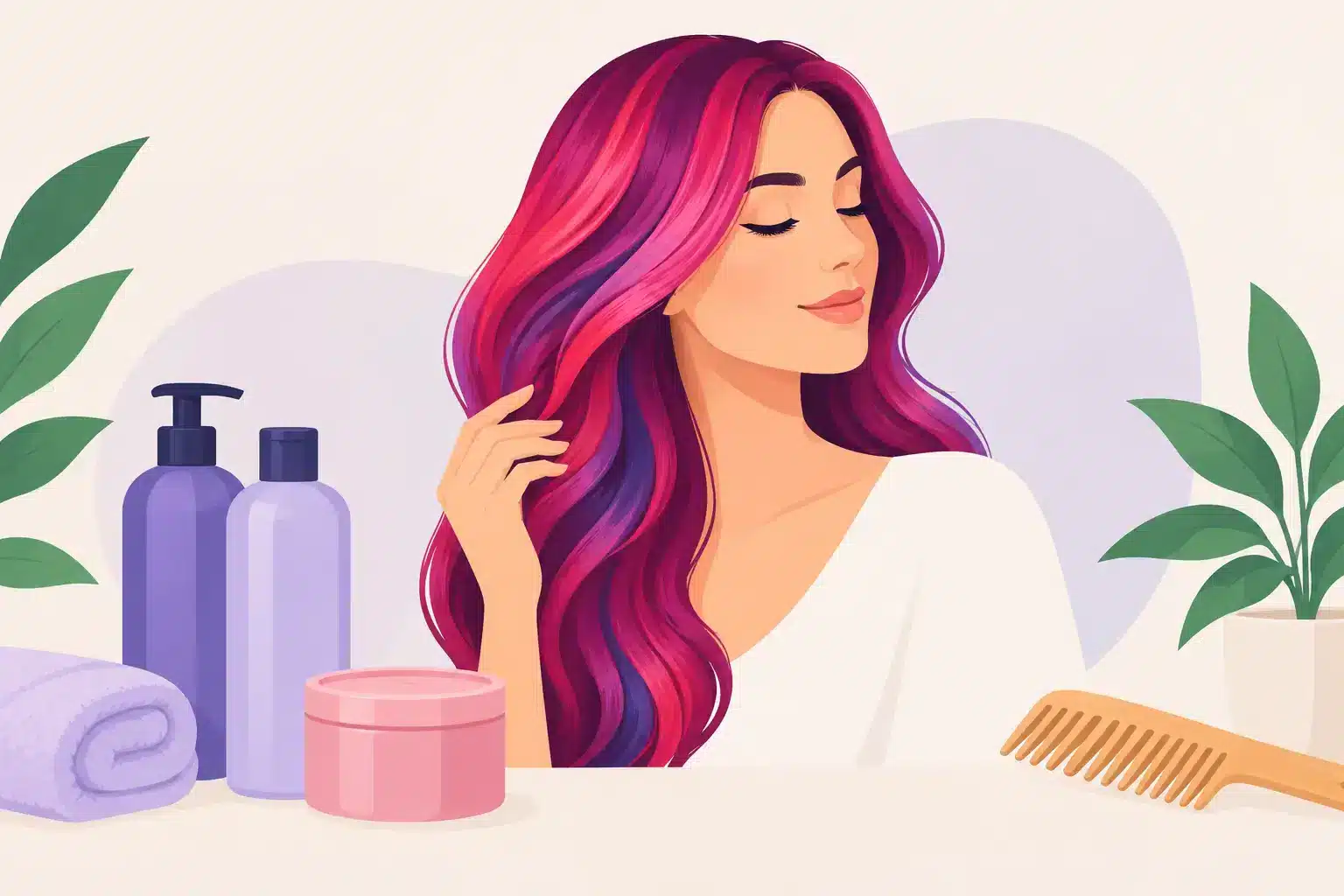
A bright violet, saturated copper, electric blue, or soft pastel is never just one color appointment. It is a collaboration between the salon work and what happens in your shower, at the beach, and during your morning styling routine. Thoughtful vivid hair color maintenance keeps the shade looking intentional longer, protects the condition of your hair, and makes your next appointment more about creativity than repair.
Fashion color has a particular kind of honesty: it shows everything. The glow of a carefully placed magenta is visible, but so is dryness, fading, uneven porosity, or a color choice that does not fit your lifestyle. The goal is not to make your color last forever. It is to help it fade gracefully, maintain the integrity of the hair, and refresh it at a pace that feels good for you.
Why vivid shades fade differently
Many vivid shades are deposited over pre-lightened hair. To create a clean canvas for a bright teal or a pale pink, the hair often needs to be lightened first. That lightening process can make the cuticle more porous, which means the vivid pigment can enter beautifully but may also rinse away more quickly.
Some colors are also simply more persistent than others. Blues and greens can hold on for a long time, sometimes shifting in tone as they fade. Reds, pinks, corals, and purples may disappear faster, especially with frequent washing. Pastels are deliberately delicate, so they need more frequent refreshing than a deeply saturated shade.
This is why a personalized consultation matters. The best color plan considers your starting level, previous color history, curl pattern or texture, hair density, home routine, and how often you are willing to come in. A color that looks wonderful in the chair should still make sense on a busy Tuesday morning.
Vivid hair color maintenance begins on wash day
The simplest way to extend fashion color is to wash less often. Water alone contributes to fading, and shampoo adds cleansing action that can pull pigment away. If your scalp and lifestyle allow it, aim to shampoo two or three times per week rather than daily. On non-wash days, a dry shampoo can be useful, but apply it lightly and cleanse thoroughly when it is time to wash so buildup does not dull the hair.
Use cool to lukewarm water. Very hot water feels relaxing, but it can encourage the cuticle to swell and release color more quickly. A cooler final rinse is a small habit with a noticeable payoff, particularly for reds and pastels.
Choose a professional color-safe shampoo and conditioner suited to your hair’s actual needs. “Sulfate-free” can be helpful for many vivid colors, but it is not the only thing that matters. If your hair is fine and gets oily quickly, an overly heavy routine can leave it flat. If your curls are thirsty after lightening, a more moisturizing cleanser and conditioner may be the better fit. The right formula should leave your scalp clean, your hair manageable, and your color as protected as possible.
Avoid reaching for a clarifying shampoo every week. Clarifying products have a place when mineral buildup, hard water, or styling residue is affecting the hair, but they can strip a fresh fashion shade quickly. If you need one, use it only as recommended by your stylist and expect that a color refresh may follow.
Heat, sun, and water can change the picture
Hot tools do not have to be off limits, but high heat is rarely kind to pre-lightened, vividly colored hair. Apply heat protectant every time you blow-dry, diffuse, curl, or flat iron. Then use the lowest effective temperature. Fine or sensitized hair usually needs less heat than coarse, resistant hair.
For clients with natural curls, diffusing on a moderate setting and avoiding repeated passes in the same area helps preserve both the curl pattern and the color. A well-shaped cut also makes a difference here. When the shape works with your natural texture, there is less pressure to restyle it with high heat every day.
Jacksonville sun, humidity, pools, and saltwater can be especially demanding on vivid shades. Before swimming, wet your hair with clean water and apply a light conditioner or protective leave-in. Hair that is already saturated with fresh water is less likely to absorb as much chlorine or saltwater. Wear a swim cap when practical, rinse immediately after swimming, and follow with a gentle, color-conscious cleansing routine.
Sun protection is not only for skin. Hats are the most reliable option for long outdoor days, and UV-protective hair products can offer another layer of support. This is especially valuable for reds, pinks, and warmer shades that can lose their richness in strong sun.
Keep the hair healthy without overdoing treatment
Healthy-looking vivid color depends on balanced hair, not an endless shelf of treatments. Lightened hair often benefits from regular conditioning masks, leave-in moisture, and occasional bond-supporting care. But too much protein or too many intensive treatments can make some hair feel stiff, dry, or difficult to style.
Pay attention to what your hair is telling you. If it feels rough, tangles easily, or lacks softness, it may need moisture and gentler handling. If it feels overly stretchy when wet or breaks more easily than usual, it is time to check in with your stylist before attempting another lightening session. Color should be expressive, but it should not ask your hair to carry more than it can handle.
Detangle patiently, beginning at the ends and working upward. Use a wide-tooth comb or a brush designed for wet hair, especially if your hair is curly or textured. Rough brushing, tight elastic bands, and aggressive towel drying can create friction that wears down fragile, color-treated lengths. A soft T-shirt or microfiber towel is a kinder choice than scrubbing with a traditional bath towel.
Refreshing your shade at the right time
A refresh does not always mean repeating a full color service. Often, the lightened foundation is still in good shape and only the fashion tone needs to be revived. A gloss, toner, color-depositing conditioner, or direct-dye refresh may bring the color back to life with less stress on the hair.
At-home color-depositing products can be useful between appointments, but they are not one-size-fits-all. The wrong tone can push a pink toward peach, make a blue look muddy, or leave uneven areas more saturated than others. They can also interfere with a future color correction if used too heavily or too often. Ask for a recommendation based on your exact formula rather than choosing a product by the photo on the bottle.
Timing depends on the color and your routine. A pale lavender may need attention within a few weeks, while a deep jewel tone may wear beautifully for much longer. Root growth is another consideration. If your vivid color begins with a lightened base, allowing too much regrowth before your visit can make the next lightening service more complex. Regular maintenance appointments are usually gentler, more predictable, and easier to customize.
Know when fading is part of the plan
Not every change in color is a problem. A carefully planned vivid shade can evolve into a softer version of itself, and that evolution may be part of the design. A coral can fade into a warm peach. A rich purple can become a silvery lavender. A darker root can give a bright mid-length and end color more dimension as it grows out.
The key is deciding whether you want a color that fades softly, stays highly saturated, or can be changed often. These are different goals, with different levels of maintenance. Richard McGraw Hair Design approaches fashion color as personal design work, so the conversation should include not only the first-day photo but also the weeks that follow.
If your color is suddenly fading in patches, your hair feels unusually dry, or your roots need more coverage than expected, do not try to fix everything at home. A brief conversation before your appointment can help shape the right service and protect the work already done.
The most beautiful vivid color is not necessarily the one that demands the most effort. It is the shade that feels like you, fits your real routine, and still brings a little pleasure when you catch it in the mirror weeks later.